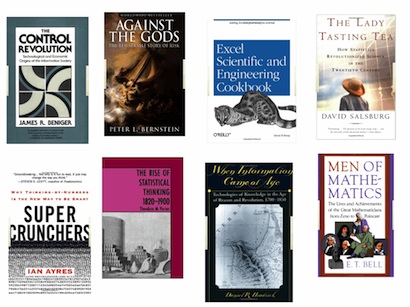
As many have requested, here are a subset (without the video and audio, alas) of the presentation that John Tolva and I presented at the 2010 Information Architecture Summit.
information discovery, management and research
As many have requested, here are a subset (without the video and audio, alas) of the presentation that John Tolva and I presented at the 2010 Information Architecture Summit.
Posted in presentations.
Comments Off
– April 23, 2010
A contextual computing approach may prove a breakthrough in personalized search efficiency.
Contextual computing refers to the enhancement of a user’s interactions by understanding the user, the context, and the applications and information being used, typically across a wide set of user goals. Contextual computing is not just about modeling user preferences and behavior or embedding computation everywhere, it’s about actively adapting the computational environment – for each and every user – at each point of computation. (p 50)
The Outride system was designed to be a generalized architecture for the personalization of search across a variety of information ecologies.(p 52)
While the results may seem overwhelmingly in favor of Outride, there are some issues to interpret. First, some of the scenarios contained tasks directly supported by the functionality provided by the Outride system, creating an advantage against the other search engines. Indeed, Outride features are specifically designed to understand users, provide support by the conceptual model and tasks users employ to search the Web, and to contextualize the application of search. This is the goal of contextual computing and why personalizing search makes sense.
Second, while the use of default profiles could have provided an advantage for Outride, it also could have negatively influenced the outcome, as the profile did not represent the test participants’ actual surfing pat- terns, nor were the participants intimately familiar with the content of the profiles. Third, some of the gains are likely due to the user interface since the Outride sidebar remains visible to users across all interac- tions, helping to preserve context and provide quick access to core search features. For example, while search engines require users to navigate back and forth between the list of search results and specific Web pages, Outride preserves context by keeping the search results open in the sidebar of the Web browser, making the contents of each search result accessible to the user with a single click. Still, the magnitude of the difference between the Outride system and the other engines is compelling, especially given that most search engines are less than 10% better than one another. (p 54)
information retrieval, search, information seeking, relevance feedback, personalization, contextual computing, user interfaces, search process
Pitkow, J., Schutze, H., Cass, T., Cooley, R., Turnbull, D., Edmonds, A., et al. (2002). Personalized Search: A Contextual Computing Approach May Prove a Breakthrough in Personalized Search Efficiency. Communications of the ACM, 45(9), 50-55.
Posted in publications, research, search.
Comments Off
– April 23, 2010
An exploratory study conducted in late autumn and early winter 2006-2007 investigates the purchasing of sponsored search advertising for a major US university’s academic department. The ad campaign used Google’s AdWord service with the goal of increasing awareness of the academic department and encouraging potential graduate admissions or admissions inquiries. A behavioral model of information seeking is suggested that could be applied for selecting appropriate types of online advertising for awareness and other advertising goals. The study found little overlap between traditional, commerce-oriented online advertising methods and a general awareness campaign, as evidenced by a low click-through rate to the targeted site. Insights for future studies include increased integration with server logs, targeted site query terms and alternative awareness strategies.
sponsored search; online advertising; search engines; behavioral model; information seeking; electronic business; Google.
Turnbull, D. and Bright, L.F. (2008) Advertising academia with sponsored search: an exploratory study examining the effectiveness of Google AdWords at the local and global level, Int. J. Electronic Business, Vol. 6, No. 2, pp.149-171.
Posted in publications, research.
Comments Off
– April 22, 2010
My other presentation at the 2010 Information Architecture Summit in Phoenix this week is with the formidable John Tolva at IBM and is focused on city-scale information architectures, the data we swim through in urban settings and how designers can and should lead in shaping this information’s collection, use and display in the system that is a city.
2:00 – 2:45PM on Sunday, April 11 in the Phoenix Room
If the future of the world is cities, how can we design user experiences at
city-sized scales? With digital interaction, are we all living in facets of the
same virtual city or does location still constrain us?
This panel will review and discuss recent research and some upcoming designs
that are only beginning to unveil how our interactions with both digital and
physical environments are changing including:
The twitter hashtag for this talk is #metroia. Feel free to send me questions directly via twitter/donturn too.
Originally, I wanted to call this talk Cosmopolitan Information Architecture, inspired by Wynton Marsalis’ definition of cosmopolitan as meaning “you fit in wherever you go”, which should be a goal for anyone shaping experiences for living in a community.
Posted in presentations.
– April 6, 2010
I am presenting on two different topics at the 2010 Information Architecture Summit in Phoenix this week.
The first talk is a set of ideas related to the work I’ve been doing recently, building data structures, crafting algorithms and designing user experiences that are powered by quantitative data.
10:30 – 11:15AM on Saturday, April 10 in Ellis
Why quantitative information architecture? Why now?
You don’t have to be RainMan or Stephen Hawking to use numbers to get things
done. Quantitative methods are applicable for IA thinking be it for hypothesis
generation, instrumentation, data collection and analysis of information at
scales never before possible with insights that are comparable over time,
generalizable and extensible.
Quantitative skills can allow IAs to interpret and analyze others’ designs and
research more readily, as well as combine methods and models for meta-analysis
to help IAs move from description to prediction in designing and developing
future interfaces and architectures.
This presentation will review why you should use quantitative methods and
discuss both foundational and emerging ideas that are applicable for content
analysis, behavioral modeling, social media usage, informetrics and other
IA-related issues.
The twitter hashtag for this talk is #quantia. Feel free to send me questions directly via twitter/donturn too.
Quantiative Information Architecture slide deck from the 2010 IA Summit
Posted in research, science, tech.
– April 6, 2010
I was very lucky this year to catch a lot of movies at the Austin Film Festival. I’m including parts of the descriptions for each movie in blockquotes with commentary of my own after each.
Matthew Weiner presents…Mad Men
Former Sopranos writer Matthew Wiener has created a masterful tale about one of New Yorks most prestigious ad agencies at the beginning of the 1960s. Focusing on one of the firms most talented and extremely mysterious executives Donald Draper. Weiner will be on hand for a special cocktail hour screening of one of his personal favorite episodes of the beloved TV show.
Weiner’s talk was the highlight of the festival for me. Why there was a TV-guy at the film festival I don’t know but I certainly enjoyed his talk about making Mad Men. We watched a recent episode: Guy Walks Into an Advertising Agency, which Weiner said was originally titled Nothing Runs Like a Deere. He said this episode was all about expectations and their anticipation. After watching it again with the audience, I saw many other ideas based on that theme. Most enjoyable was seeing the episode with a theater full of people. You forget how great the dialogue is, especially John Slattery as Roger Sterling. His timing is perfect and with a spirited, enthusiastic audience – had us roaring. Mad Men has been renewed for a fourth season too, so lots to look forward to.
Ethan Inglebrink an eccentric agoraphobic heroin addict w ho is obsessed with his garden is searching for the perfect moment in a life that is running out of time. And the odds are against him. This darkly comedic tale set in small town California follows the last days of Ethan’s life as he struggles to find love and purpose – at a time when it might be too late to even matter.
This movie was interesting, especially for the cast of actors (Diane Ladd, Rip Torn, Cloris Leachman, Val Kilmer, Peter Falk, Bruce Dern). The plot is odd, and meanders a little in the middle (ok, a lot) but it was fun. I ran into the star and co-writer Ronnie Gene Blevins, the next night in line and he implied it was quite an experience. I commented that they should have featured the donkey more in the trailer, as a donkey always equals comedy gold.
The sharp-witted Byington returns with the Austin-shot story of Harmony a prototype nightmare dumpee – the sort of heartbroken friend you take out for consolatory drinks two or three times before resorting to any excuse to avoid hearing yet again the play-by-play rehash of what went wrong with his relationship. Never self-indulgent Byington creates a memorable modern comedy with subtle and sharp performance from his cast.
Locally made here in Austin and starring lots of local talent. Nice to see some Austin locations, but once you know Austin, you realize some strange liberties are taken with the driving about town. The audience was really behind this film, which made it fun to watch. Good dialogue and a few strong scenes, but I couldn’t tell if most of the movie was improvised or not. Not that it matters.
A dramatic comedy set in small town Rhode Island brings tog ether elements of depression romance and self exploration among a dysfunctional family of men. Lonely and frustrated after a bitter break up Caleb warns his younger brother against women especially the pretty young thing he’s bringing home for the holidays. His indifferent opinion and steely resolve is put to the test as his attraction to Peter’s girlfriend begins to grow. The Vicious Kind features a very well written script and inspired performances by Simmons Scott and Frost.
Hard to classify, but interesting characters. I also didn’t know they had McMansions in Connecticut.
With Houston We Have a Problem filmmaker Nicole Torre steps inside the world of Texas oil culture to understand just how the United States developed its large appetite for crude. Wildcatters independent oilmen and even the president of Shell Oil examine some hard truth s while discussing the history and the future of this limited commodity upon which we have become so dependent and weigh in on the future of this country’s energy supply.
A talky documentary about the history of oil, mostly in Texas, and what we’ve got to look forward to next. A surprising range of opinions (some unintentionally humorous). My big takeaway was to invest in energy stocks, which might not quite be the point.
In 1994 real-life crop artist Stan Herd traveled from Kansas to Manhattan’s Upper West Side to create a massive environmental artwork on land owned by Donald Trump. The multi-acre artwork was made from soil rock plants and vegetation near an underground railway tunnel. Stan recruited a number of homeless individuals living in the tunnel to become his crew. Over the months it took to complete the earthwork Stan dealt with a number of difficulties in bringing his unique rural art form to an urban canvas. In the process he unexpectedly encountered the true meaning of his art and it’s ultimate lasting rewards.
Nicely cast and acted movie. The most surprising thing about it was that the director, Chris Ordal, mentioned in the post-screening chat that it was shot on location in Kansas instead of somewhere in New York. Also, a supporting role by the great Zach Grenier.
What if you were a Hollywood movie star with an obsession for cars and racing? You would probably read every script with even the tiniest link to the subject matter in hopes that you could tell a great car story the likes of Grand Prix Le Mans or Mad Max. Then one day you open your garage door and sitting there right in front of you is the inspiration that gets you thinking about that old saying If you want something done right Eric Bana has now unwillingly cast himself in his own real life drama and it is a love story between Eric and the car he has owned since he was fifteen. We follow him from inside the race car to the surreal world of the red carpet. The personal and social pressures mount up in the face of re-building a car that means so much to him.
Finely directed and edited movie. This surely had a larger budget behind it over most at the festival and it showed. Nice driving cinematography and some candid moments for Bana and his group of friends.
A world that’s more riot than profession, the trading floors of Chicago are a place where gambling your family’s mortgage is all in a day’s work. Floored, at a time when markets are unhinged, offers a unique window to this lesser-known world of finance. These men may not have degrees, but they’ve got guts, and penchant for excess that solicits simultaneous feelings of revulsion and admiration. But like many aspects of our economy, technology is changing the way these traders do business, and these eccentric pit denizens aren’t the type to take kindly to new tricks.
An interesting insight into some computer-phobic people. Very candid (and amusing) commentary by several interviewees.
During the winter of 1846, a group of westward bound settler s is stranded in the Sierra Nevada Mountains. They must reach California for salvation, but without food and a guide, the group becomes disillusioned and decisions must be made so that others can stay alive. Inspired by the infamous Donner Party tragedy, the film is a harrowing look at survival and how far some will go to achieve it.
This movie looked beautiful, and the performances were on target. I was reminded a lot of Deadwood. However, I felt that with the casting (Glover) I was expecting something a bit more divergent (quirkier). I left this movie about half-way through because of the disrespectful behavior of others in the audience. People on both sides of me had their phones out throughout the movie and the festival staff let others in late with some clamor. One late-arriving couple sat near me and chatted/mumbled amongst themselves continuously.
The timely odyssey of Ryan Bingham, a corporate downsizer and consummate modern business traveler who, after years of staying happily airborne, suddenly finds himself ready to make a real connection. Ryan has long been contented with his unencumbered lifestyle lived out across America in airports, hotels and rental cars. He can carry all he needs in one wheel-away case; he’s a pampered, elite member of every travel loyalty program in existence; and he’s close to attaining his lifetime goal of 10 million frequent flier miles and yet . . . Ryan has nothing real to hold onto. When he falls for a simpatico fellow traveler, Ryan’s boss, inspired by a young, upstart efficiency expert, threatens to permanently call him in from the road. Faced with the prospect, at once terrifying and exhilarating, of being grounded, Ryan begins to contemplate what it might actually mean to have a home.
In some ways it is unfair to compare this movie to the others. Obviously working with a much larger budget gives you a different kind of film. I’ll summarize that I liked it and remember hearing the book is interesting too. Reitman did a post-screening Q&A and was highly entertaining and talked a lot about his process writing (and re-writing) and directing.
Comments Off
– October 30, 2009
Does GERTY = BOB?
Gerty, from the Moon (the movie).

Gerty
And in comparison, Microsoft Bob – Wikipedia, the free encyclopedia.
Posted in media, movies, tech.
Comments Off
– July 26, 2009
As we’ve done in the past, let’s all get together for a pre-SXSW meetup Thurs March 12th, 5-7pm at The Cedar Door, 201 Brazos St. (2 blocks from the Austin Convention Center).
If you’re getting to Austin for SXSW Interactive just a little early, come on by and get your SXSW started with some others in town a day early too, not to mention meet some of us lucky enough to live in Austin. Feel free to forward this to others you know coming to Austin for SXSWi too.
Those of you in Austin, tell your Web/IA/Designer/Startup/SWSXi-like friends to meet us there. (Look for the geekiest crowd at the Cedar Door, trust me, that’ll be us. Probably on the East patio.)
Here’s an upcoming link for the event, if you’re into that kind of RSVPing.
Note that now you can pick your SXSW interactive badge on at the Austin Convention Center the same evening, come to the meetup, then pick up your badge!
Posted in austin, media, sxsw, tech.
Comments Off
– March 5, 2009
While driving through Arlington on I-30, I got a look at the new Dallas Cowboys Stadium under construction.

Doesn’t it look just a little bit like the Legion of Doom’s headquarters?

Posted in austin.
– November 18, 2008